Do Plantation Shutters Keep the Heat Out in an Adelaide Summer?
How much plantation shutters cut summer heat in Adelaide, how closed louvres work against west sun, and where they help most.
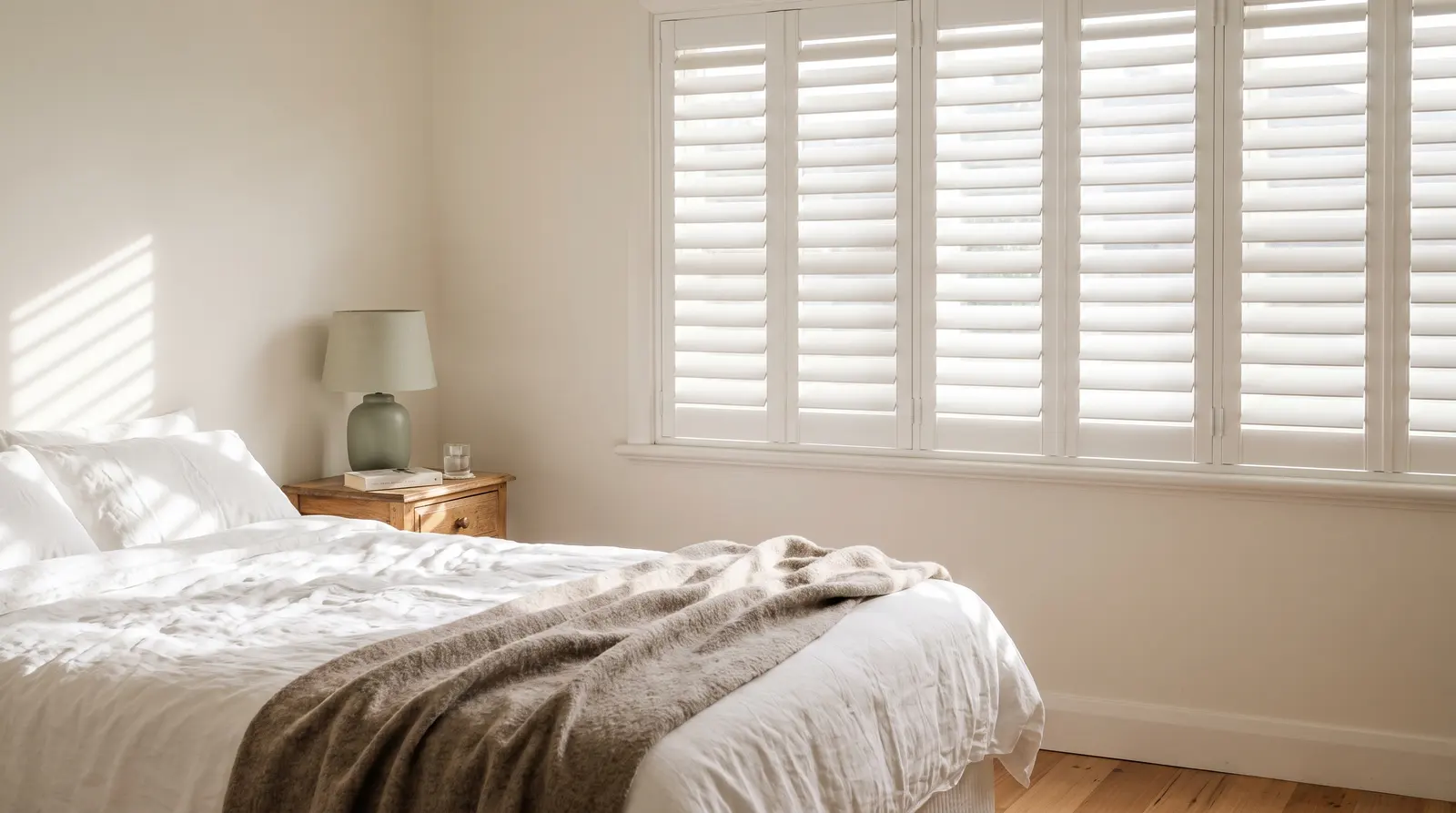
The short answer
Yes, plantation shutters keep meaningful heat out during an Adelaide summer, but only when they are fitted tight to the window and closed before the day heats up. On a west-facing window in a 40-degree Adelaide heatwave, closed shutters block direct sun and cut the radiant heat pouring through the glass, easing the load on your air conditioner. They are a barrier at the window, not magic insulation, so how and when you use them matters as much as the material.
Adelaide summers are brutal on the western and northern sides of a house. A single afternoon above 40 degrees turns an unshaded window into a radiator, and by 6pm the whole room is still holding that heat long after the sun has moved on. Homeowners want to know whether indoor shutters actually help, or whether they are just a good-looking window dressing. The answer is that they genuinely help, and the physics is worth understanding so you buy the right thing and use it properly.
How shutters block Adelaide heat
Roughly 87 percent of a home’s heat gain in summer comes in through the glass, according to the Australian Government’s Your Home guide to keeping cool. Sunlight passes through the window, hits the floor and furniture inside, and re-radiates as heat that the glass then traps. A closed plantation shutter sits on the inside face of that window and does two jobs: the solid louvres block the direct beam of sun, and the air gap between the shutter and the glass slows the transfer of radiant heat into the room. It is the same principle as closing a curtain, except the shutter is a rigid, fitted barrier rather than loose fabric, so there is far less leakage around the edges.
The catch is timing. A shutter that gets closed at 4pm, once the room is already baking, is working against a problem that has already happened. Closed at 10am on a forecast scorcher, it stops the heat before it builds. The best result on the hottest days comes from treating the western windows like a first line of defence and shutting them early. Our room-by-room estimator helps you map which rooms cop the worst afternoon sun so you know where the payoff is biggest, and the pillar guide Plantation Shutters for Living Rooms and Open-Plan Spaces covers the big west-facing glass most Adelaide homes struggle with.
Do they really cut your power bill?
This is where honesty matters. Shutters are not double glazing and they are not wall insulation, so nobody should promise you a halved summer power bill. What they do is reduce the peak radiant load on your worst windows, which means the air conditioner cycles less hard during the hottest part of the day. On a west-facing living room with 6 square metres of glass, blocking the direct afternoon sun makes a room that used to be unbearable by 5pm actually usable, and the split system stops running flat out to keep up.
The Australian Government’s energy.gov.au guidance is clear that window coverings are a real part of a home’s thermal strategy, working alongside eaves, external shading and ceiling insulation rather than replacing them. Think of a plantation shutter as one layer in that stack. It carries most of its weight on the windows that face the summer sun, and far less on a shaded southern window that never gets a direct beam.
PVC, timber or aluminium for the heat?
Material changes how a shutter copes with Adelaide extremes more than most people expect.
| Material | Heat behaviour | Best Adelaide use |
|---|---|---|
| PVC / polymer | Will not warp, crack or fade in direct sun and heat | West and north-facing windows, wet areas |
| Timber / basswood | Warm look, but hard direct sun can fade or move it over years | Bedrooms and shaded rooms away from harsh afternoon sun |
| Aluminium | Conducts heat but is fully weatherproof and rigid | Outdoor-facing and exterior applications |
For the windows that take a beating from the Adelaide afternoon, PVC is usually the smart call: it holds its shape and colour through years of 40-degree days where a timber shutter in the same spot can slowly bow or lose its finish. Save the timber for bedrooms and southern rooms where it looks its best and the sun never hits it square on. The comparison in Plantation Shutters for Kitchens and Wet Areas goes deeper on why moisture and heat push most Adelaide homes toward PVC in the rooms that matter.
The Adelaide myth worth correcting
There is a persistent belief that any window covering will keep a room cool, so a cheap internal blind does the same job as a fitted shutter. In a mild climate that is roughly true. In an Adelaide summer it is not. A loose roller blind leaves gaps down both sides and across the bottom, and hot air rolls straight past it into the room, which is why a room can still heat up with the blind down. A made-to-measure plantation shutter is built to the millimetre for the opening, so the barrier is close to continuous and the closed louvres seal against each other.
The other half of the myth is that closed shutters make a room dark and stuffy on a hot day. The opposite is the useful trick: angle the louvres so they block the direct sun but still let a slice of daylight and airflow through, and you get a shaded, ventilated room instead of a sealed dark box. That adjustability is the whole point of a louvred shutter over a solid blind, and it is why they earn their keep across a long Adelaide summer rather than just on the worst day.
Bedrooms: the overnight cool-down
The heat story does not end at sunset. Adelaide’s hottest nights barely drop below 25 degrees, and a bedroom that soaked up sun all afternoon stays warm well past midnight. Shutting the bedroom shutters during the day keeps that room cooler going into the evening, so it is already ahead when you want to sleep. Then, if the overnight air outside finally cools, you can tilt the louvres open to pull that cooler air through without throwing the window wide to the street. The detail on getting bedrooms right sits in Plantation Shutters for Bedrooms: Light, Privacy and Sleep, which covers the light-blocking and privacy side that pairs with the heat control.
Getting it measured properly
The heat performance you actually get comes down to the fit. A shutter measured 5 millimetres loose leaks warm air around the frame and undoes half the benefit, which is exactly why a free measured quote is the only figure worth trusting. A specialist measures every opening, confirms the right material for each window’s aspect, and sizes the louvres so they seal properly when closed. Indicative supply-and-fit pricing runs from around $220 per square metre for PVC up to $650 for aluminium, but the accurate number for your home only comes after a measure. For independent guidance on comparing home-improvement quotes, South Australia’s Consumer and Business Services is a useful reference on licensing and fair trading.
The bottom line
Plantation shutters are a real defence against Adelaide summer heat when they are the right material for each window, made to measure for a tight fit, and closed early on the days that matter. They will not replace insulation or the air conditioner, but on a west-facing room in a heatwave they turn an unusable space back into a comfortable one and take the load off your cooling. The move is to get it measured on your own windows. Get a free quote on indoor shutters from local specialists and compare, at no cost and no obligation.