Plantation Shutter Style Trends for 2026
The plantation shutter trends shaping Adelaide interiors in 2026: colours, louvre sizes, finishes and the looks on the way out.
The short answer
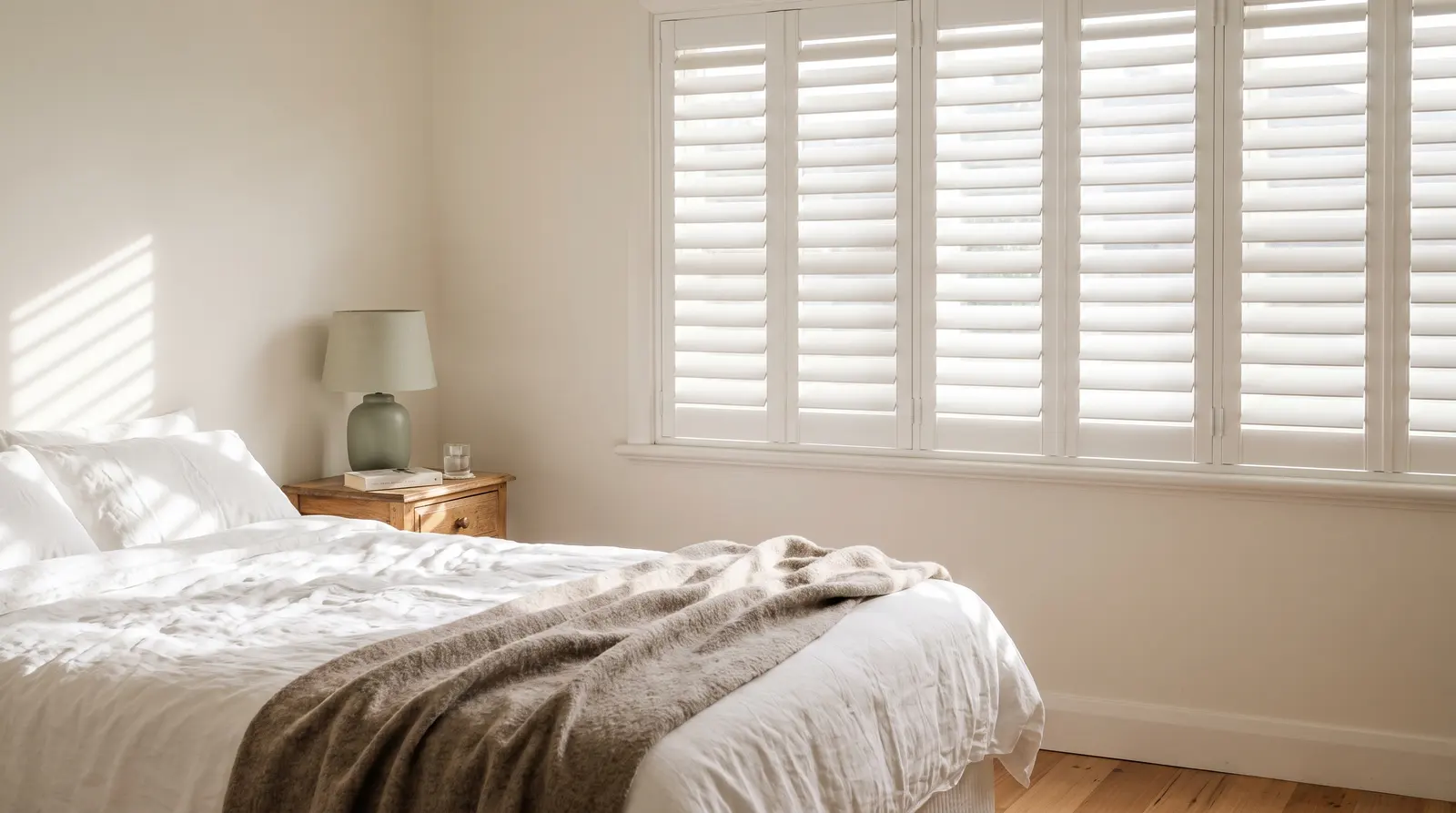
The defining plantation shutter trends for 2026 are warm off-white and greige tones over stark white, wider 89mm and 114mm louvres for a cleaner look, mixed materials matched to each room, and full-height panels on tall and bay windows. Adelaide homeowners are also leaning into colour-matched frames and hidden tilt rods. The look is calmer, more architectural and built to last, which suits our heat and heritage stock.
Shutters move slowly as a category, which is exactly why the 2026 shifts matter. You are choosing a fitting that stays on the window for 15 to 20 years, so the styling choice you make now should read as current for a long time rather than dated by next spring. The good news is that this year’s direction is toward restraint: softer whites, bigger louvres and material picked for the room rather than the showroom. Below is what is actually selling across Adelaide, and how to apply it without over-styling your home.
Warm whites and greige replace stark white
Bright brilliant white has been the default shutter colour for a decade, and in 2026 it is finally giving way to warmer, softer tones. Off-whites, oat, greige and pale mushroom read as calmer against the warm-white and limestone palettes common in Adelaide homes, and they hide dust and the yellowing that stark white shows over years of sun. If you are shuttering the rooms you live in most, the warmer neutrals age better. Our indoor shutters range covers the full colour run, and the guide to plantation shutters for living rooms and open-plan spaces shows how these softer tones sit against timber floors and larger glazing. For the whole-home colour and material mix, the room-by-room estimator is the fastest way to see it costed out.
Wider louvres for a cleaner, more architectural line
Louvre width is the single biggest styling decision, and 2026 is decisively the year of the wider blade. The 63mm louvre that dominated the 2010s is being replaced by 89mm and 114mm blades, which give a cleaner sightline, fewer horizontal bars across the window and a more open, uninterrupted view when the shutters are tilted. On large living-room and bedroom windows the effect is noticeably more architectural. The trade-off is honest: wider louvres let in more light when open but block marginally less when closed, so a bedroom that needs deep darkness may still favour a slightly narrower blade. The Plantation Shutters for Bedrooms: Light, Privacy and Sleep guide covers that darkness trade-off in detail.
Hidden tilt rods and colour-matched frames
Two smaller details are quietly defining the premium look for 2026. The first is the hidden or rear tilt rod: instead of the traditional centre bar running down the face of every panel, the louvres are linked at the back, leaving a clean, unbroken front. The second is the colour-matched or contrast frame, where the surround is finished to match the wall for a built-in look, or deliberately contrasted (a soft charcoal frame on a white shutter) for definition. Both push shutters away from the builder-grade default and toward something that looks specified rather than retrofitted.
Material matched to the room, not the whole house
The biggest practical trend is mixing materials through the home rather than fitting one type everywhere. Waterproof PVC or polymer goes in the bathroom, ensuite, laundry and kitchen where moisture and heat rule out timber. Warmer basswood timber goes in the living rooms and bedrooms where the grain and weight are worth paying for. Aluminium handles anything exposed to weather. This is the single most effective way to control cost while getting the right look in each space, and it is exactly why plantation shutters for kitchens and wet areas sit in a different material bracket to a formal-lounge fitting. Australia’s Your Home guide makes the same point about matching window coverings to a room’s heat load and use, rather than treating every window the same.
The Adelaide angle: shutters as a heat tool, not just a look
Here is the local reality most trend pieces skip. In a city that regularly pushes past 40 degrees in a run of summer days, a plantation shutter is genuinely a thermal fitting, not decoration. Closed light-coloured louvres on a west-facing Adelaide window cut the radiant heat that hits the glass before it enters the room, which is why the warm-white trend is doing more than looking good: pale blades reflect more than dark ones. Australian efficiency guidance puts the number in context. Up to around 40 percent of a home’s heating energy can be lost and up to about 87 percent of its heat gained through unprotected windows, according to the national energy efficiency resources. That is the myth worth correcting for 2026: shutters are often sold on style, but in Adelaide their strongest case is the summer power bill. A north or west room fitted with light, wider-louvre shutters is a comfort and running-cost decision as much as an aesthetic one.
What is fading out
- Stark brilliant white everywhere. Still valid in a crisp coastal scheme, but no longer the automatic default.
- Narrow 63mm louvres on large windows. They read busy on big glazing next to an 89mm or 114mm blade.
- Front centre tilt rods on feature windows. Fine and cheaper, but the hidden rod is now the premium signal.
- One material for the whole house. Timber in a steamy Adelaide bathroom is still a mistake, trend or not.
None of these are wrong, they are just no longer the fashionable pick. If budget is tight, a narrower louvre with a front tilt rod in a warm white still looks excellent and costs less.
How to apply the 2026 look to your home
Start with the rooms you use most and pick a warm neutral, then choose the widest louvre that still gives the light control that room needs. Match the material to the space rather than the house. The one figure that actually matters is a free measured quote, because your window sizes, reveal depth and orientation move both the look and the price more than any trend does. Indicative pricing gives you a budget; a measure gives you a number. When comparing quotes, South Australia’s Consumer and Business Services is a useful reference on trader licensing and fair trading before you commit.
The bottom line
For 2026, go warmer on colour, wider on louvres, cleaner on hardware and smarter on material, room by room. It is a calmer, more architectural look that suits Adelaide light and lasts. When you are ready to see it on your own windows, get a free quote through our local specialists and compare the styling and the price side by side on our indoor shutters page. The measure is free, and it turns every trend on this page into a firm plan for your home.