Are PVC Plantation Shutters Any Good? Pros and Cons
The real pros and cons of PVC plantation shutters: where they shine, where they fall short, and whether they suit your Adelaide home.
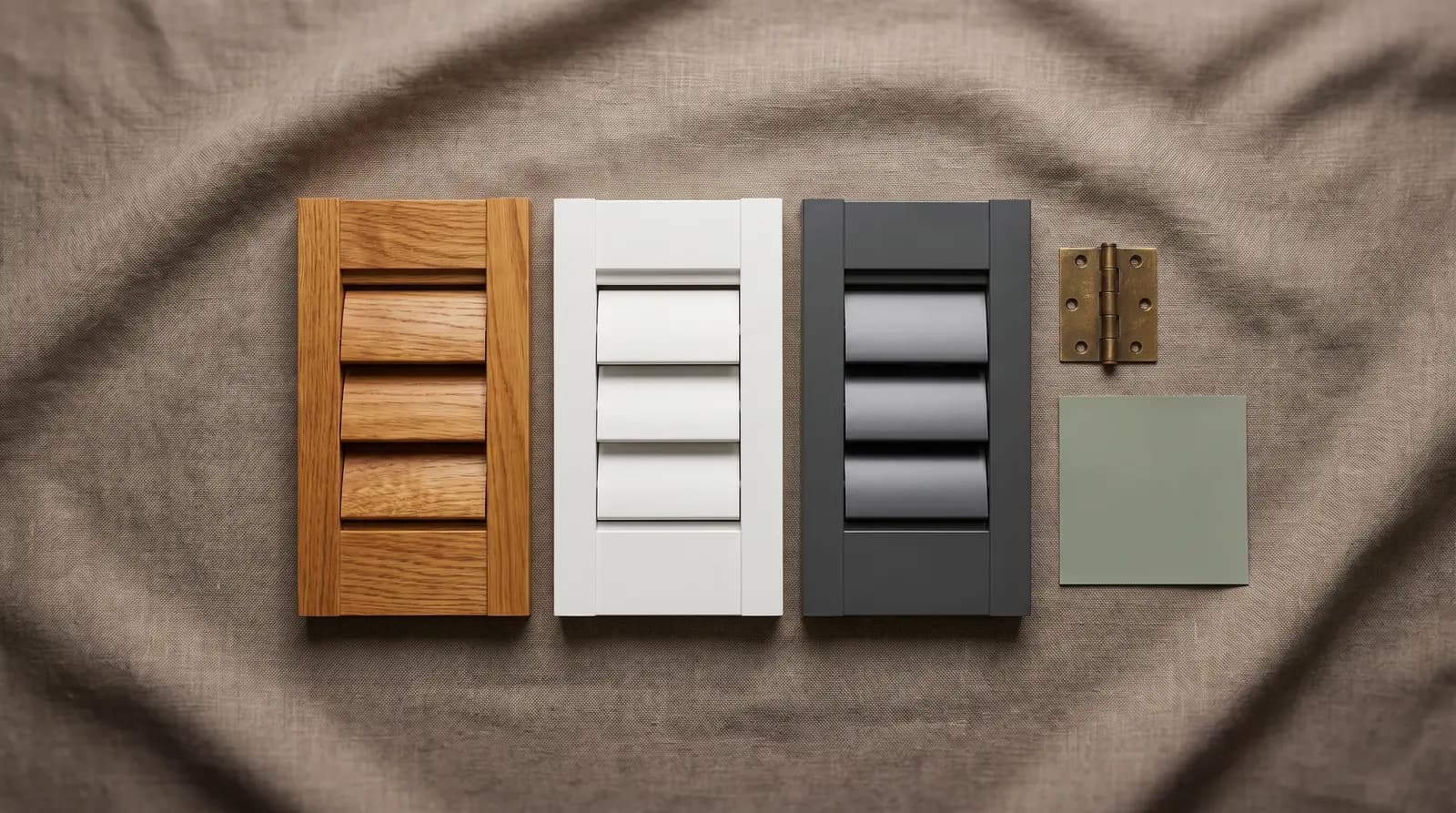
The short answer
PVC plantation shutters are genuinely good in the right rooms. They are fully waterproof, do not warp, swell or rot, wipe clean in seconds and cost the least of any shutter material, which makes them the smart pick for bathrooms, kitchens, laundries and any high-humidity window. The trade-offs: they feel less premium up close than timber, very wide panels need a bracing rail, and the pure-white finish is not for everyone. For wet areas the pros clearly win. For a grand living-room feature, timber usually earns its higher price.
“PVC” sounds cheap, so plenty of Adelaide homeowners write it off before they have looked at one. That is a mistake. Modern PVC plantation shutters are a rigid polymer moulded over an aluminium or steel core, not the flimsy vinyl of 20 years ago, and in the rooms they suit they outperform every other material. The honest way to judge them is room by room, which is exactly what our shutter material selector does in under a minute. Below is the full pros-and-cons picture, with real Adelaide figures.
The pros: where PVC wins
The case for PVC is strongest anywhere water, steam or heat is in play, and that covers a surprising amount of a typical home.
- Fully waterproof. PVC does not absorb moisture, so it will not warp, swell, split or grow mould. That is why it is the default for bathrooms, ensuites, laundries and above kitchen sinks. If you only read one comparison, make it the best shutters for bathrooms and wet areas.
- Lowest cost. PVC is the value choice at roughly $220 to $350 per square metre installed in Adelaide, against $350 to $550 for timber. On a whole home that gap adds up fast.
- Effortless cleaning. A damp cloth is the entire maintenance routine. No re-oiling, no re-painting, no special products.
- Heat and fade resistant. Quality PVC holds its colour under a harsh Adelaide summer sun far better than a painted timber panel, which can yellow or chalk on a west-facing window.
- Good insulation. The hollow polymer construction traps air, which helps at the window, one of the biggest sources of heat loss and gain in a home. The Australian Government Your Home guide explains why treating the glazing matters for comfort and running costs.
The cons: where PVC falls short
No material is perfect, and PVC has 3 real limitations worth knowing before you commit.
- Less premium up close. Timber has a grain and a warmth that a moulded polymer cannot fully copy. From across a room the difference is small; standing at the window, a discerning eye will notice it.
- Weight and wide spans. PVC is heavier than basswood, so a very wide window may need an extra mid-rail or a split into 2 panels to keep the louvres from sagging over time. A good specialist designs around this, but it can interrupt the view on a large opening.
- Colour range. PVC is strongest in whites and off-whites. If you want a deep stained-timber look or an unusual custom colour, timber or aluminium gives you more freedom. If a timber feature wall of windows is the goal, weigh it up in the PVC vs Timber Plantation Shutters: How to Choose (Adelaide) guide.
A worked Adelaide example
Take a 4-window bathroom-and-ensuite job in a Mitcham home: 2 openings around 1.2m wide and 2 smaller frosted windows. Priced in PVC, that job lands around $1,100 to $1,700 installed. The same 4 windows in painted timber run closer to $1,700 to $2,600, and crucially, timber in a steamy ensuite risks swelling at the joints within a few years. Here PVC is not the compromise, it is the correct material and it saves you roughly $600 at the same time. Flip the room to a formal north-facing lounge with a 3m picture window and the calculus reverses: timber’s look and slimmer frames justify the premium.
The myth worth correcting
The most common mistake is treating “PVC” as a single quality tier. It is not. Cheap unbraced PVC does exist and it does sag, which is where the material earned its poor reputation. Reputable Adelaide specialists fit aluminium-cored PVC (sometimes branded as polymer or thermal shutters) with a concealed metal insert in the stiles, and that product stays straight and square for decades. When you compare quotes, ask whether the PVC is aluminium-reinforced. It is the single question that separates a shutter that lasts from one that does not. For general guidance on comparing home-improvement quotes and your rights, South Australia’s Consumer and Business Services is a useful reference.
PVC vs the alternatives at a glance
| Factor | PVC | Timber | Aluminium |
|---|---|---|---|
| Cost (per m2 installed) | $220 to $350 | $350 to $550 | $400 to $650 |
| Waterproof | Yes | No | Yes |
| Premium look | Good | Best | Industrial |
| Best for | Wet areas, value | Living, bedrooms | Outdoors, security |
If your real question is indoor timber versus a weatherproof metal option for a patio or alfresco, the aluminium vs timber plantation shutters comparison covers that decision in full. For choosing responsibly on materials and running costs, the energy.gov.au window coverings guide is worth a read.
So, are PVC plantation shutters any good?
Yes, when they are matched to the right window and reinforced properly. For bathrooms, kitchens, laundries and value-driven whole-home jobs they are the clear best choice, and for most other rooms they are a perfectly good one. The right answer for your home is almost always a mix: PVC where there is water and warmth, timber where you want the showpiece. The only way to know your exact figure is a free measured quote, because size, access and reinforcement move the price more than the material label alone.
The simplest next step is to compare. We pass your enquiry to a local specialist who covers your suburb, so you can get a free, no-obligation quote on PVC plantation shutters and see the real number for your windows side by side, then choose with confidence.