Aluminium vs Timber Plantation Shutters
When aluminium beats timber and when it does not. Durability, sun, outdoor use and cost compared for Adelaide conditions.
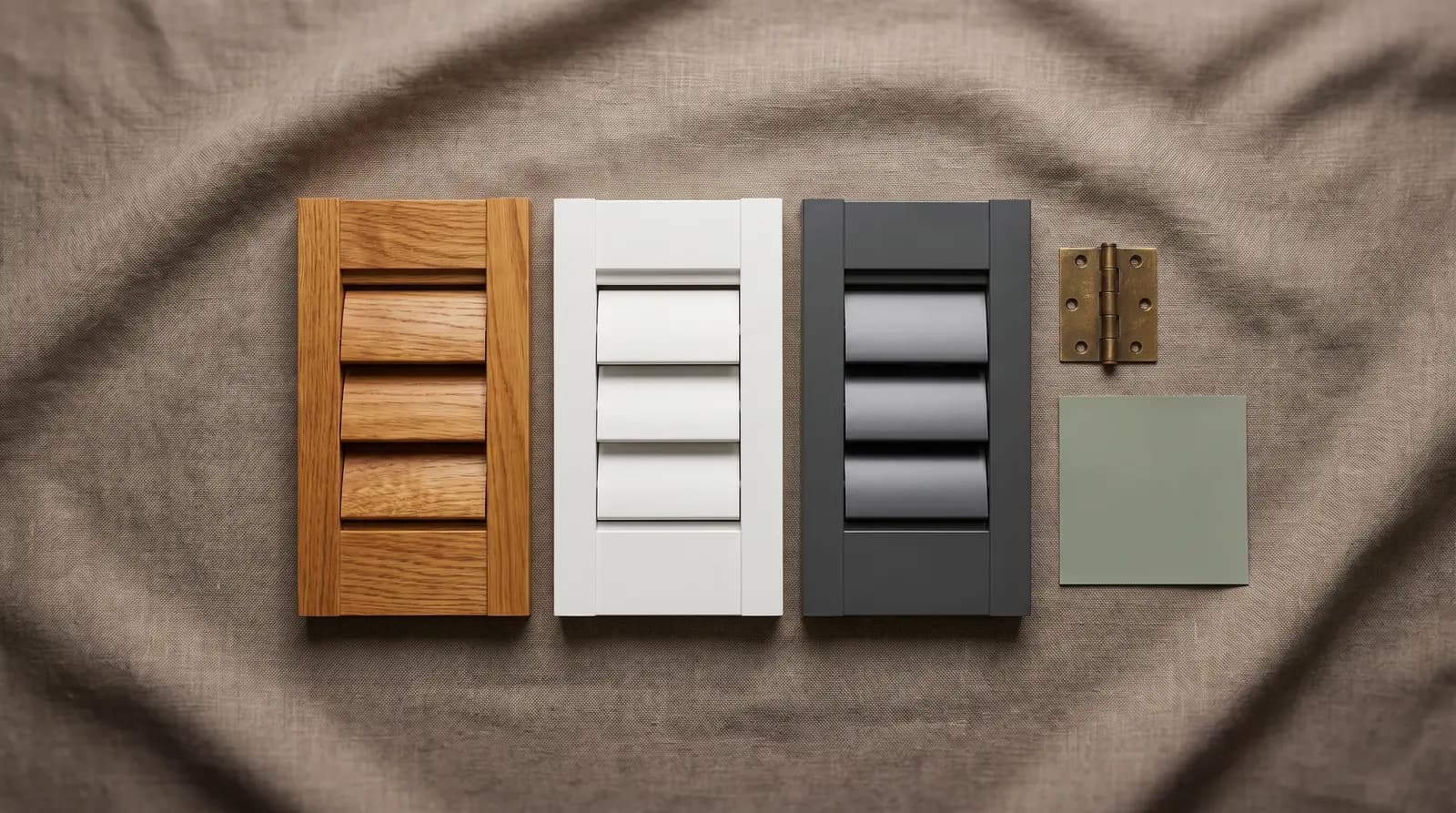
The short answer
Choose aluminium plantation shutters where water, weather or security matter: bathrooms, alfresco areas, pool surrounds and outward-facing openings. Choose timber where warmth and a premium interior finish matter: living rooms, bedrooms and formal spaces. Aluminium is the tougher, weatherproof specialist, timber is the warmer, more furniture-like choice, and in a real Adelaide home the best answer is usually both, room by room. The only accurate figure is a free measured quote.
Aluminium and timber sit at opposite ends of the shutter spectrum, so this is rarely a one-material house. Timber is the classic interior plantation shutter: warm, solid, and read as a piece of furniture on the window. Aluminium is the engineered outdoor and wet-area specialist: it will not warp, swell or rot when it meets Adelaide humidity, chlorine or driving rain. Below is how they actually compare, where each wins, and a worked Adelaide example so you can see the money.
Aluminium vs timber at a glance
Both are made to measure and both look sharp when installed well. The differences that matter are water resistance, weight, weather tolerance and price. For a broader material picture that also covers polymer, our guide to choosing between PVC and timber shutters in Adelaide is the companion read, and the shutter material selector will point you to the right material for each room in about a minute.
| Factor | Aluminium | Timber / basswood |
|---|---|---|
| Best for | Outdoors, wet areas, security, pool and alfresco | Living rooms, bedrooms, formal interiors |
| Water and humidity | Fully weatherproof, will not swell or rot | Interior only, can swell in constant moisture |
| Warmth of look | Clean and modern, more industrial | Warm, natural grain, furniture-like |
| Weight and hardware | Heavier, needs robust framing on wide spans | Lighter, easy on standard reveals |
| Indicative installed price | $400 to $650 per square metre | $350 to $550 per square metre |
When aluminium is the right call
Aluminium earns its place anywhere water and weather are constant. Think outward-facing patio enclosures, pool fences, alfresco screens and bathrooms that steam up daily. It is the only shutter material rated for genuine outdoor exposure, it adds a real security layer on ground-floor openings, and it shrugs off UV without fading the way a painted timber can. If your project is a wet room rather than a whole home, our roundup of the best plantation shutters for bathrooms and wet areas explains why aluminium and waterproof polymer beat timber every time water is involved.
One myth worth correcting: people assume aluminium looks cold and cheap. Powder-coated aluminium in a warm off-white or a timber-look finish reads far softer than the raw metal most people picture, and on an outdoor opening it is the finish that still looks new in 10 years while a timber shutter has long since needed repainting. Australia’s Your Home materials guide is a good neutral reference on how different materials weather in our climate.
When timber is the right call
Timber wins on warmth and premium feel, full stop. In a lounge, a main bedroom or a formal dining space, a basswood or western red cedar shutter reads as joinery, not as a window covering. It takes stain and paint beautifully, the grain adds depth a flat material cannot, and it is lighter, so it hangs cleanly on standard reveals without heavy framing. The trade-off is that timber is an interior material: put it somewhere with constant moisture and it can swell, stick or discolour over time. Keep it dry and it is the most beautiful shutter you can buy. Weatherproof PVC plantation shutters are the sensible stand-in for the handful of wet rooms where you still want a clean white shutter look without the cost of aluminium.
The mistake most people make
The most common and most expensive mistake is treating this as a single decision for the whole house. Homeowners lock in one material, then either overpay for aluminium in bedrooms that never see a drop of water, or put timber in a bathroom and watch it swell within a couple of Adelaide winters. The right approach is room by room: timber where it is dry and you want warmth, aluminium where it is wet, exposed or needs security, and polymer as the budget waterproof option in between. Matching the material to the room is where the value is, not picking one champion.
A worked Adelaide example
Take a typical Unley villa with 12 windows: a family bathroom, an ensuite, a laundry, an alfresco enclosure, plus 8 dry interior windows across the living and bedrooms. Timber across all 12 might land around $6,500 fitted, but you would be putting a moisture-prone material into 3 wet rooms and an outdoor space it is not rated for. Split it instead: aluminium on the alfresco enclosure (roughly $900 for the exposed span), waterproof polymer in the bathroom, ensuite and laundry (around $1,200 for the 3), and timber across the 8 dry interior windows (around $4,200). That mix comes in near $6,300, costs about the same as timber-everywhere, and every window has the right material for its room. That is a better home for the same spend, which is the whole point.
Prices here are indicative only, and every real quote depends on your exact sizes, access and finish. For independent guidance on comparing home-improvement quotes and understanding your rights, South Australia’s Consumer and Business Services and the ACCC consumer resources are useful references on licensing and fair trading.
So which should you choose?
Choose aluminium for anything wet, exposed or security-related, and choose timber for dry interior rooms where warmth and finish are the priority. If the budget matters more than the premium timber look, weigh polymer as the waterproof middle ground, and our honest rundown of the pros and cons of PVC plantation shutters lays out where it fits. For most Adelaide homes, the answer is a considered mix rather than a single material.
The fastest way to price your exact rooms is to have them measured. A specialist measures every opening to the millimetre, confirms the right material for each room, and quotes the real job for free with no obligation. We pass your enquiry to a local specialist who covers your suburb, so you can get a free quote and compare timber, aluminium and polymer side by side before you decide. Start with a free, no-obligation quote and choose with confidence.