8 Plantation Shutter Mistakes to Avoid
The 8 most common plantation shutter mistakes Adelaide homeowners make, from the wrong material to a botched measure, and how to avoid them.
The short answer
The costliest plantation shutter mistakes are measuring the windows yourself, choosing the wrong material for a wet or sun-blasted room, chasing the cheapest quote, and skipping the on-site measure. Every one of them shows up after installation, when the shutters are made and paid for and impossible to return. Get a free measured quote from a local Adelaide specialist and almost all of these errors disappear before a panel is ever cut.
Plantation shutters are a permanent, made-to-measure fixture, not an off-the-shelf blind you can swap out next season. That is exactly why the wrong decision is so expensive: the panels are manufactured to your specific opening, so a mistake in the material, the measurement or the fitter is baked in for a decade or more. Below are the 8 mistakes we see most often across Adelaide homes, and the simple move that prevents each one.
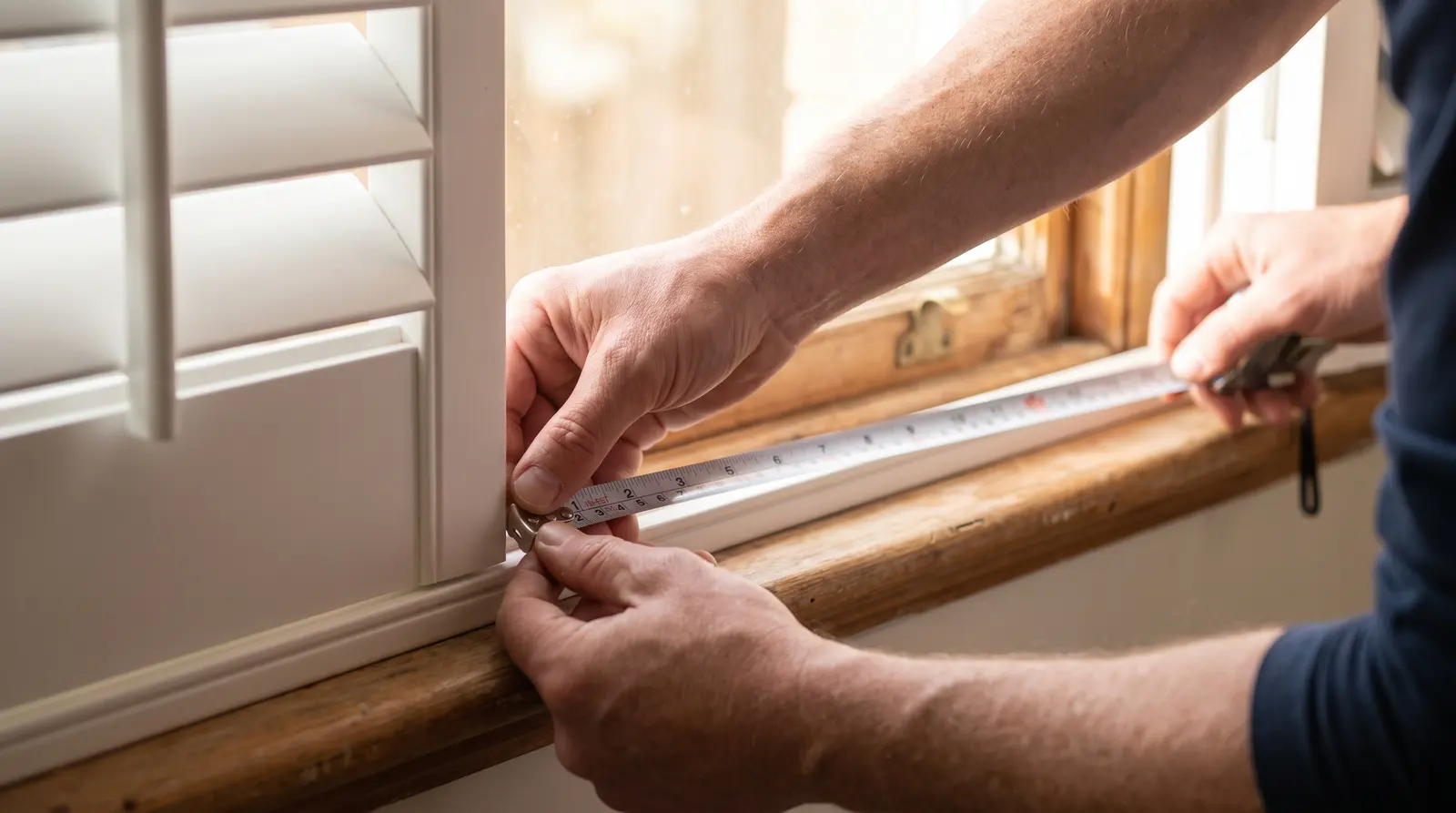
1. Measuring the windows yourself
This is the single most common and most expensive error. Plantation shutters need tolerances of a few millimetres, and Adelaide has a lot of older housing (bluestone villas in Unley and Norwood, 1920s bungalows, deep heritage reveals) where openings are rarely square. A DIY measurement that is 5mm out can mean a panel that binds, a light gap down one side, or a frame that will not sit flush. Because the shutter is cut to your figures, the maker builds exactly what you specified, and a re-make is on you. A professional measure is free, takes the liability off your shoulders, and is the only figure worth building from. Our guide to measuring for plantation shutters explains why a pro measure protects you, and the custom made-to-measure shutters page shows how the fit is handled end to end.
2. Choosing the wrong material for the room
Timber looks beautiful in a lounge and warps badly in a steamy ensuite. PVC shrugs off bathroom humidity but can feel less premium in a formal living space. Aluminium handles a west-facing Glenelg window that bakes all afternoon, where a cheaper polymer might bow over summers of 40-degree heat. Picking one material for the whole house to keep it simple almost always means compromising somewhere. The fix is a room-by-room material mix, which our room-by-room estimator models in a couple of minutes: waterproof PVC in wet rooms, warm timber in living and sleeping rooms, and aluminium where the sun is relentless. Getting this right at the quote stage costs nothing; getting it wrong means living with the compromise or paying twice.
3. Treating the cheapest quote as the best quote
A quote that comes in hundreds below the others is telling you something. Usually it is a thinner louvre, a lower-grade hinge, a stock size forced onto a non-standard opening, or a fitter who is not licensed or insured. Plantation shutters are a long-term fixture, so the real question is value over 10 years, not the sticker price today. This is why comparing 3 quotes matters more than beating one down: 3 measured quotes show you the genuine market range and expose the outlier that is cutting a corner. The guide to choosing a plantation shutter installer in Adelaide sets out exactly what to check before you sign, and the ACCC consumer resources are a solid reference on comparing home-improvement quotes fairly.
4. Skipping the on-site measure and buying on a phone estimate
Some suppliers will quote a firm price over the phone from the number of windows alone. That is a red flag. Without an on-site measure, nobody has confirmed the reveal depth, whether the window is square, how the architraves sit, or which mount the opening needs. The result is a price that changes on install day, or shutters that do not fit the reveal they were sold for. A no-obligation measured visit is standard practice from any specialist worth using, and it is free. If a firm price arrives before anyone has stood in front of your window with a tape, treat the number as fiction.
5. Ignoring bay windows and angled openings until it is too late
Bay windows, corner returns, arches and raked openings are where DIY plans and cheap quotes fall apart. Each panel in a bay meets its neighbour at an angle, and the join has to be cut so the louvres clear each other and close cleanly. Get the angle wrong and the panels foul, or the light gaps look amateur. These openings need a specialist who has measured plenty of them, not a generalist guessing on the day. If your home has a bay or an angled opening, read our guide to plantation shutters for bay windows and angled openings before you get quotes, so you can tell who actually understands the geometry.
6. Getting the louvre size wrong for the window
Louvre width is not just a style choice, it changes the view and the light. Narrow 63mm louvres suit small windows and a traditional look but stack more blades across the panel, cutting the view when open. Wide 89mm and 114mm louvres give a cleaner sightline and more light on larger living-room and bay windows, but can look heavy on a tiny bathroom opening. Homeowners often pick a size from a showroom sample without seeing it on their own window, then find it dominates or disappears. A specialist will recommend the right louvre for each opening during the measure, which is another reason the on-site visit earns its keep.
7. Forgetting Adelaide sun, heat and privacy in the plan
Shutters are a genuine thermal and privacy tool, not just decoration, and Adelaide's climate makes that matter. A closed shutter on a west-facing window blocks the harsh afternoon sun that fades floors and cooks a room, and the air gap between shutter and glass adds real insulation. The Australian Government's Your Home guide to keeping cool confirms that adjustable external and internal shading is one of the most effective ways to cut summer heat gain. Plan louvre control and placement around your worst sun and your least private windows, not just the look, and the shutters pay you back every summer.
8. Assuming shutters are fit-and-forget with no aftercare
The final myth: that once shutters are up, there is nothing more to do. Hinges loosen, tilt rods need the occasional adjustment, and timber can shift slightly with the seasons. A quality install from a licensed specialist comes with a workmanship warranty and a clear point of contact if something needs tweaking. A cash-in-hand fitter with no paperwork leaves you with nobody to call. Confirm the warranty and the licence before you commit, and keep your paperwork. South Australia's Consumer and Business Services is the reference for licensing and fair-trading questions if a job goes wrong.
The bottom line
Nearly every mistake on this list traces back to 2 shortcuts: measuring it yourself and buying from a single quote. Fix both and the rest look after themselves. Share your windows and we pass them to a local Adelaide specialist who measures on-site for free and recommends the right material and louvre for each room. Get a free quote for custom made-to-measure shutters and choose with confidence, before a single panel is cut.