The Anatomy of a Plantation Shutter (Louvres, Frames, Tilt Rods)
Every part of a plantation shutter explained: louvres, stiles, rails, tilt rods and frames, so you can read a quote with confidence.
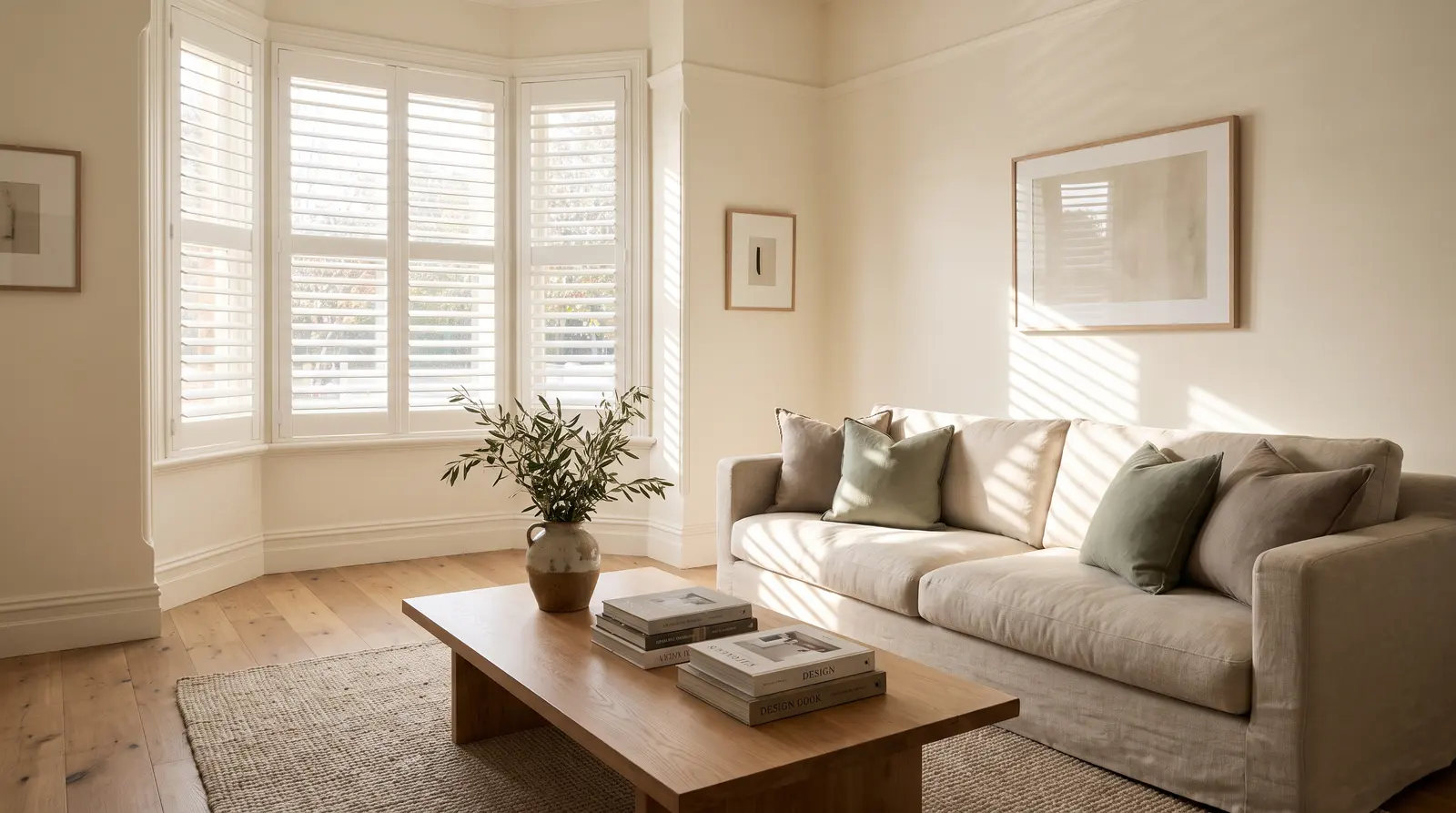
The short answer
A plantation shutter is built from a few core parts: the outer frame that fixes to your window, the panels that swing on hinges, the horizontal louvres (the slats) that tilt open and shut, and the tilt rod or a hidden mechanism that moves them together. Add the stiles and rails that form each panel, plus the hinges, magnets and mount, and you have the whole anatomy. Knowing these 6 parts by name makes it far easier to compare quotes and spot a quality build.
Once you can name the parts of a shutter, a quote stops being a mystery and starts being something you can judge. Every made-to-measure panel is assembled from the same handful of components, and the way a specialist builds each one is exactly where quality (and price) lives. This guide walks through each part in plain English, then shows how the pieces fit together on a real Adelaide window. If you want the bigger picture first, our plain-English guide to what plantation shutters are sets the scene, and you can see the full product range on our plantation shutters in Adelaide page.
The frame: how a shutter fixes to your window
The frame is the fixed outer border that mounts to your window reveal or architrave and holds everything else. It is the first thing a specialist measures for, because Adelaide homes vary wildly: a 1920s Norwood villa with a deep, out-of-square masonry reveal needs a very different frame to a new Mount Barker build with a shallow plaster reveal. The common frame profiles are an L-frame (a slim right-angle for face fitting), a Z-frame (which sits inside the reveal), and a bevelled or deco frame for a chunkier heritage look. Getting the frame right is why a shutter material selector and an on-site measure matter more than any online estimate: the reveal depth decides whether your louvres can even clear the glass when they tilt.
Panels, stiles and rails
A panel is the moving section that swings open on hinges. Each panel is a little frame in its own right, made of vertical stiles (the two upright sides) and horizontal rails (the top and bottom, plus a divider rail on taller windows). The louvres are housed between the stiles. A standard window might be a single pair of panels that meet in the middle, while a wide living room opening is split into 3 or 4 narrower panels so each one stays rigid and does not sag over time. Panel count is one of the quiet cost drivers: more panels means more stiles, more hinges and more labour, which is part of why width alone does not tell the whole story on a quote.
Louvres: the slats that do the work
The louvres are the horizontal slats that tilt to control light, privacy and airflow. They are the part everyone pictures when they think of plantation shutters, and louvre size is the single biggest style decision you will make. Common widths are 47mm, 63mm, 89mm and the very popular 114mm. Wider louvres give a cleaner, more contemporary look and a clearer view when open, because there are fewer slats blocking the glass. Narrower louvres suit smaller windows and period cottages where the proportions would look off with a big slat. A common myth is that wider louvres are always better: on a small bathroom window, 114mm louvres can look oversized and leave awkward gaps, so the right louvre is the one that suits the opening, not the biggest one available.
Tilt rod or clearview: how the louvres move together
The tilt rod is the vertical bar down the front (or centre) of a panel that links the louvres so they all tilt in unison when you move one. It is a traditional, sturdy look and it is the part that gives plantation shutters their classic face. The modern alternative is a hidden or clearview tilt: instead of a visible rod, a concealed metal rod runs inside the stile, so the louvres move together with nothing blocking the view. Clearview is a small premium but it is the most-requested upgrade we see, because it looks clean and shows off the glass. Neither is better in absolute terms: a front rod reads as more period-authentic, while a hidden tilt suits a minimal, contemporary room.
The hardware you never think about
- Hinges. These carry the weight of each panel and let it swing. Quality hinges are one of the clearest tells of a well-made shutter, because cheap ones are where sag and rattle start.
- Magnets and catches. Small magnets hold the panels closed against the frame so they sit flush and do not drift open.
- Louvre pins and tension. Each louvre pivots on pins, and the tension is set so slats hold their angle rather than drooping under their own weight.
- Mid or divider rail. On tall windows a horizontal divider rail lets the top and bottom banks of louvres tilt independently, so you can have privacy below and light above.
How the parts fit together: a worked example
Picture a standard 1200mm by 1500mm living room window in a Prospect bungalow. A specialist fits a Z-frame into the reveal, then hangs 2 panels that meet in the centre. Each panel is built from 2 stiles and 2 rails, with roughly 14 louvres of 89mm slat stacked between them. The homeowner chooses a hidden clearview tilt, so there is no front rod breaking up the view. Fitted in PVC that window sits around $300 to $600, and in timber closer to $450 to $900. Swap to a wide 3000mm bay and the same anatomy repeats across 4 panels with a divider rail, which is why bay windows carry a complexity uplift. If you are still deciding whether shutters are the right call at all, our honest comparison of plantation shutters and blinds and the run-down of the benefits of plantation shutters for Adelaide homes both help. Prices here are indicative only, and a free measured quote is the single accurate figure for your windows.
For independent background on window furnishings and how they affect energy and comfort, the Australian Government’s Your Home guide covers shading and glazing well, and CHOICE publishes impartial buying advice for comparing home products.
Why the parts matter when you compare quotes
Two quotes for the same window can differ by hundreds of dollars, and the anatomy is usually why. One specialist may quote a basswood timber panel with a hidden tilt and quality hinges, while another quotes a lighter PVC panel with a front rod. Neither is wrong, but they are not the same product, and only a like-for-like comparison tells you which is genuinely better value. That is exactly what this service is built for: we do not sell your details to a call centre, we match you with local specialists who measure to the millimetre and quote the exact build.
The bottom line
A plantation shutter is a frame, panels made of stiles and rails, tilting louvres, a tilt rod or hidden mechanism, and the hinges and magnets that hold it all together. Once you know those parts, you can read a quote properly and choose with confidence. The best next step is to get a free, no-obligation quote on your exact windows: share your measurements through our plantation shutters in Adelaide page and we will match you with local specialists who price the real build, part by part.