How Louvre Size Changes the Look and Light (63mm vs 89mm vs 114mm)
The louvre-size decision is the one that most changes how shutters look. How 63mm, 89mm and 114mm blades differ for Adelaide windows.
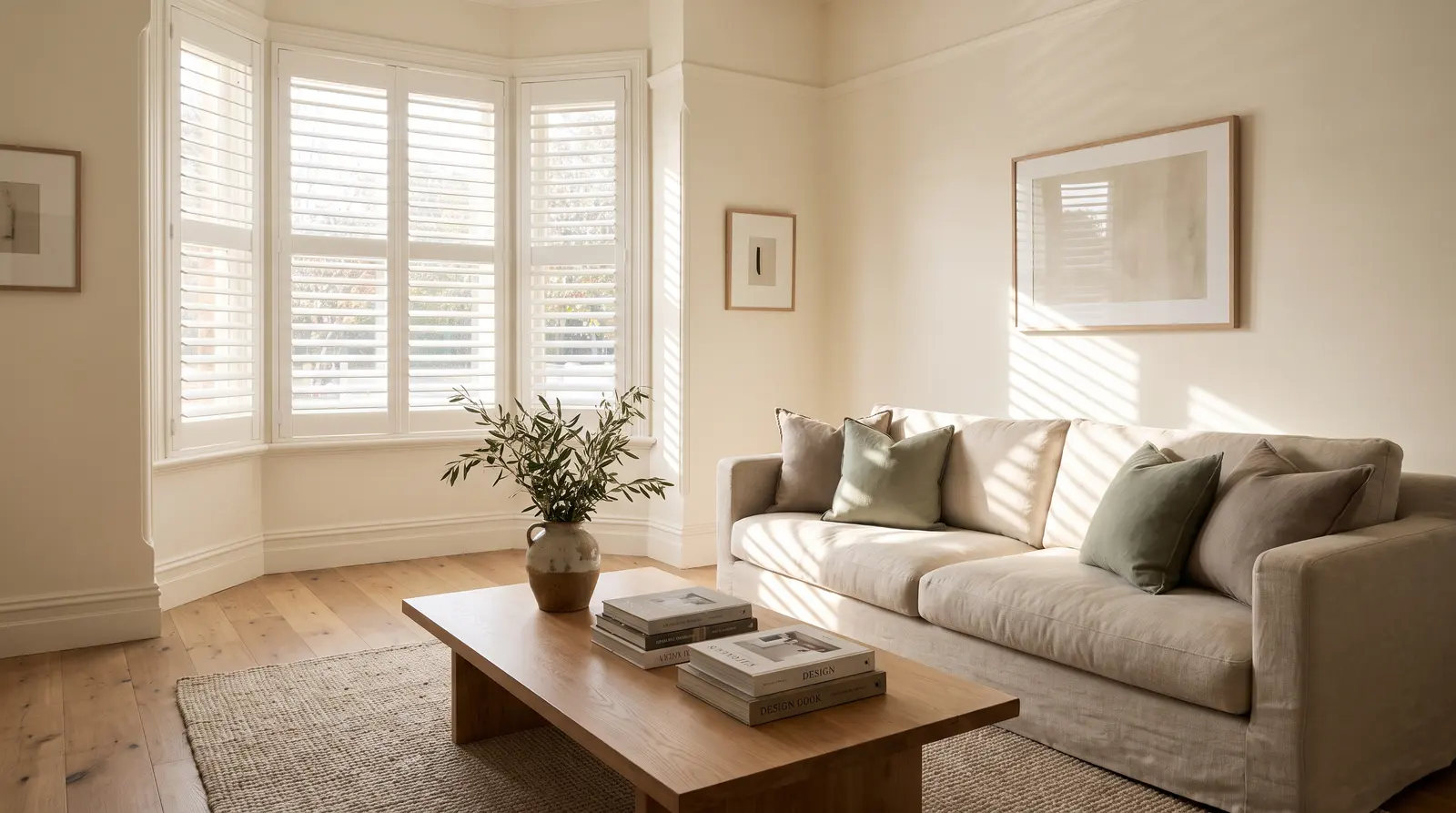
The short answer
Plantation shutters come in 3 common louvre sizes: 63mm, 89mm and 114mm. The 63mm blade suits small windows and heritage cottages, 89mm is the all-round favourite for most Adelaide homes, and 114mm gives the widest view and the most light on large living-room windows. Wider louvres mean fewer blades, a cleaner look and a bigger view out, but slightly less precise light control when tilted.
Louvre size (the width of each horizontal blade) is the single design choice that changes how a shutter looks and how much light it lets in, yet most people only hear about it once a specialist is standing at the window. Get it right and the shutter frames the glass and disappears into the room. Get it wrong and a delicate cottage window ends up looking heavy, or a big picture window looks fussy. This guide covers the 3 sizes that matter for plantation shutters in Adelaide, what each one does to the look and the light, and how to pick without second-guessing yourself.
The 3 common louvre sizes explained
Almost every Australian shutter maker offers the same core range. The measurement refers to the blade width, so a larger number means a wider, more open blade and fewer of them across the window.
| Louvre size | Best for | Look and light |
|---|---|---|
| 63mm | Small windows, cottages, heritage homes | More blades, a finer traditional look, the most precise light control |
| 89mm | Most windows in a typical Adelaide home | The balanced all-rounder: clean view, good light, suits almost any room |
| 114mm | Large living, dining and picture windows | Fewest blades, the widest view out and the most light when open |
If you are still choosing between PVC, timber and aluminium as well, run your rooms through our shutter material selector first, then think about louvre size, because the material sets your budget and the louvre sets the look. New to the product entirely? Start with What Are Plantation Shutters? A Plain-English Guide and come back here for the sizing detail.
How louvre size changes the light
The physics is simple: wider blades leave larger gaps when tilted open, so more daylight floods in and you see more of the view. Narrower blades sit closer together, so you can fine-tune the light in smaller steps and block more of it when closed. A 114mm louvre in a west-facing Adelaide living room lets you throw the blades open on a mild afternoon and keep the view of the garden, then angle them down to cut the harsh summer glare that our late-afternoon sun is famous for. A 63mm louvre in a bedroom gives you finer control to dim the room without fully closing it.
No plantation shutter is a full blackout blind, and that is worth saying plainly because it is a common myth. Even fully closed, a sliver of light passes between the blades and around the frame. Louvre size barely changes that. If total darkness is the goal, pair the shutter with a block-out blind or curtain rather than expecting the blades alone to do it. For the wider trade-offs against soft furnishings, our Plantation Shutters vs Blinds: An Honest Comparison lays it out.
How louvre size changes the look
Blade width sets the character of the whole window. Narrow 63mm louvres read as traditional and detailed, which is why they belong on Adelaide’s bluestone cottages, Federation villas and anything with small-paned original windows. Wide 114mm louvres read as modern, calm and architectural, which suits a rendered new build or a renovated open-plan living zone with big glass. The 89mm blade sits in the middle and flatters almost everything, which is exactly why it is the most-fitted size across the state.
Scale matters too. Wide louvres on a tiny window look out of proportion, with only 2 or 3 blades stacked up like a set of oversized slats. Narrow louvres on a floor-to-ceiling window create a busy ladder of blades that fights with the view. Match the blade to the glass and the shutter looks like it was designed for the opening, because it was.
A worked example: matching louvres room by room
Here is how a real Adelaide 3-bedroom home might mix sizes rather than defaulting to one blade everywhere. Say the living room has a 2400mm wide picture window, the main bedroom has a standard 1200mm window, and the bathroom has a small 600mm frosted opening.
- Living room (2400mm picture window): 114mm louvres. The wide blade keeps the view open and only needs a handful of blades across the span, so the window reads clean rather than cluttered.
- Main bedroom (1200mm window): 89mm louvres. The all-rounder gives you a tidy look with enough blades to dial the morning light up or down.
- Bathroom (600mm opening): 63mm louvres. On a small frosted window the finer blade looks in proportion, and 63mm is usually the sensible choice on anything under about 700mm wide.
Mixing sizes like this is standard and does not cost more per window than picking one size throughout, because the price is driven by area and material, not blade width. Blend in a material mix (waterproof PVC in the bathroom, warmer timber in the living areas) and you get the best look and value in the same job. For the full case on why the product is worth it at all, the 9 Benefits of Plantation Shutters for Adelaide Homes guide covers light control, insulation and resale value.
The mistake most people make
The single most common error is choosing a louvre size from a photo on a screen without seeing a physical sample at the actual window. A 114mm blade that looks striking in a magazine shot of a huge open-plan space can overwhelm a modest suburban bedroom. Always ask the specialist to hold a sample panel up to your glass in your own light before you commit. Louvre size is fixed once the shutter is made to measure, so this is a decision you make once. A good specialist brings samples of all 3 sizes to the measure for exactly this reason.
Because a plantation shutter is a made-to-measure product, choosing well also protects you at the contract stage. The South Australian Consumer and Business Services site explains your rights on custom home-improvement work, and the ACCC consumer resources are a useful reference on comparing quotes fairly before you sign anything.
How to choose with confidence
As a rule of thumb: pick 63mm for small or heritage windows, 89mm as the safe default for most rooms, and 114mm for large windows where the view and the light matter most. Then have every opening measured, because the accurate figure and the final sample check only come from a specialist at your window. This service arranges that for you at no cost: share your windows and we pass your enquiry to a local specialist who covers your suburb, so you get a free, no-obligation quote and choose with confidence. Start on the plantation shutters page and let the samples and the numbers make the decision easy.